Feb
16
2013
Day 2 with the SS Achromat
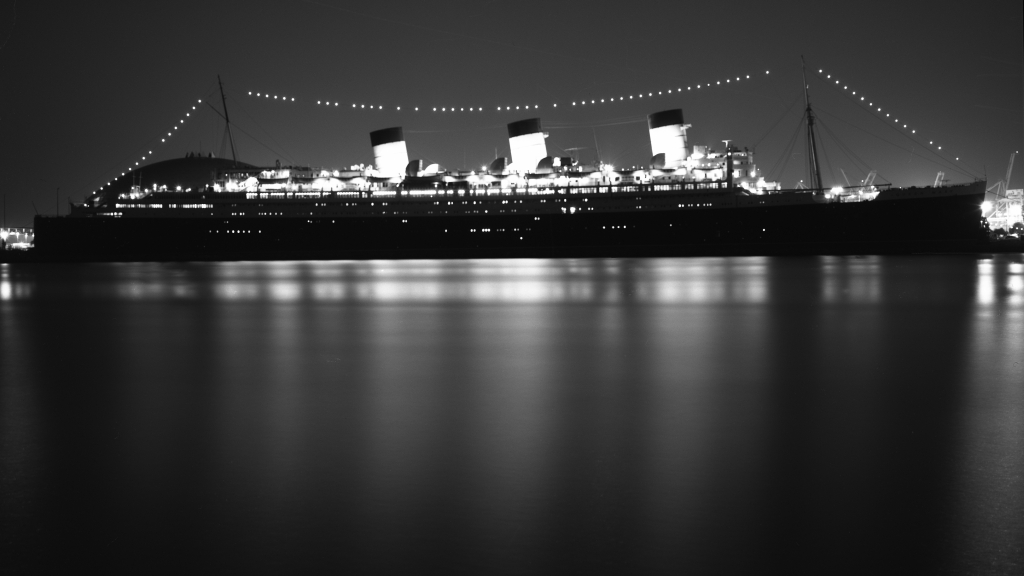
I’m really liking how this $7 lens renders with collodion.

Surplus Shed 333mm Cemented Achromat Doublet
12 seconds, noon
4×5 Black Aluminum
OWH
KCN
I’m really liking how this $7 lens renders with collodion.
Surplus Shed 333mm Cemented Achromat Doublet
12 seconds, noon
4×5 Black Aluminum
OWH
KCN
Here’s proof that you don’t need expensive brass lens to have fun with collodion. Perused Surplus Shed and found an Achromat Cemented Doublet for $7.00 with a focal length of 333mm and diameter of 42.7mm giving an aperture of roughly f/8 at infinity.
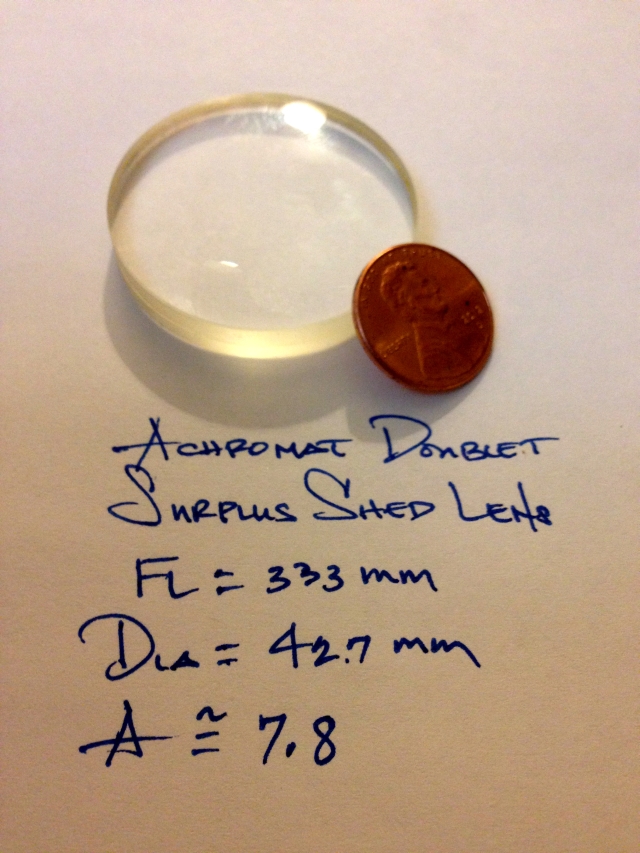
333mm Achromat Doublet Lens Spec
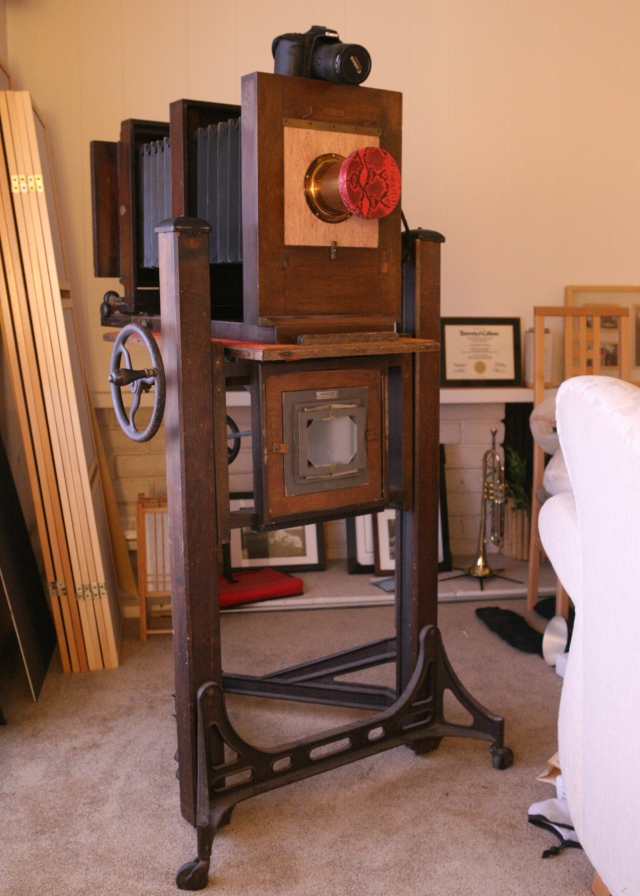
After wrapping black electrical tape around the lens (I plan on blackening the edge with permanent marker next time), I chucked it up on an lens iris clamp and mounted it on the Gundlach 4×5 Korona.
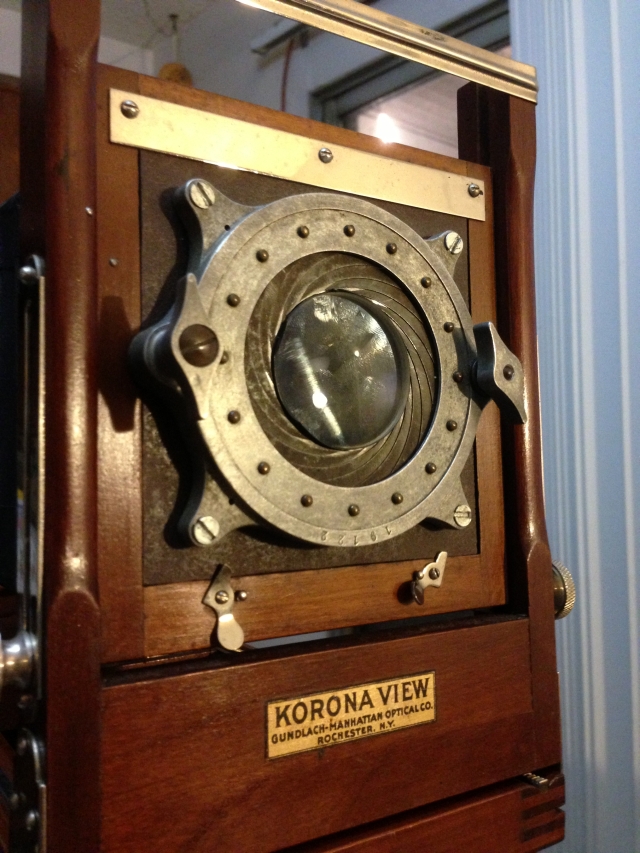
333mm Achromat Doublet Lens on Korona
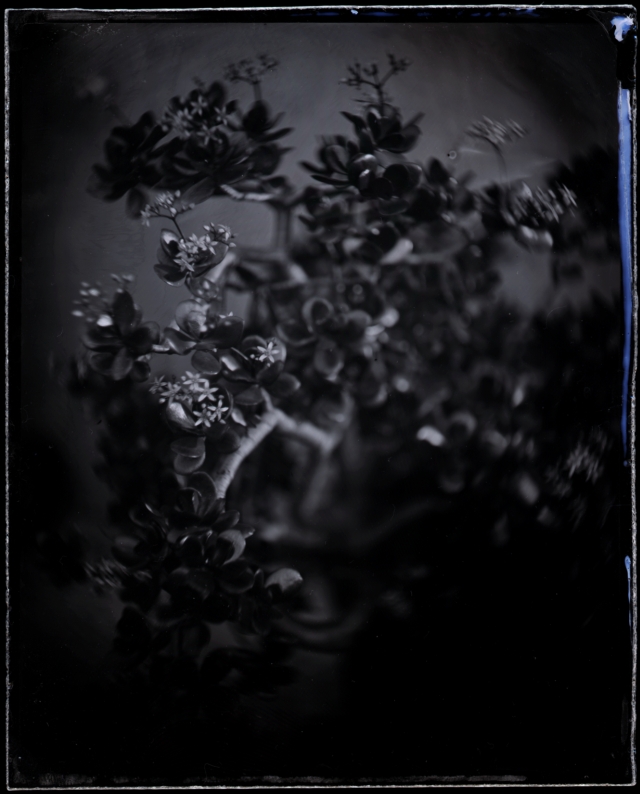
I grabbed my favorite succulent and mixed some Ol’ Workhorse – the result is quite pleasing.
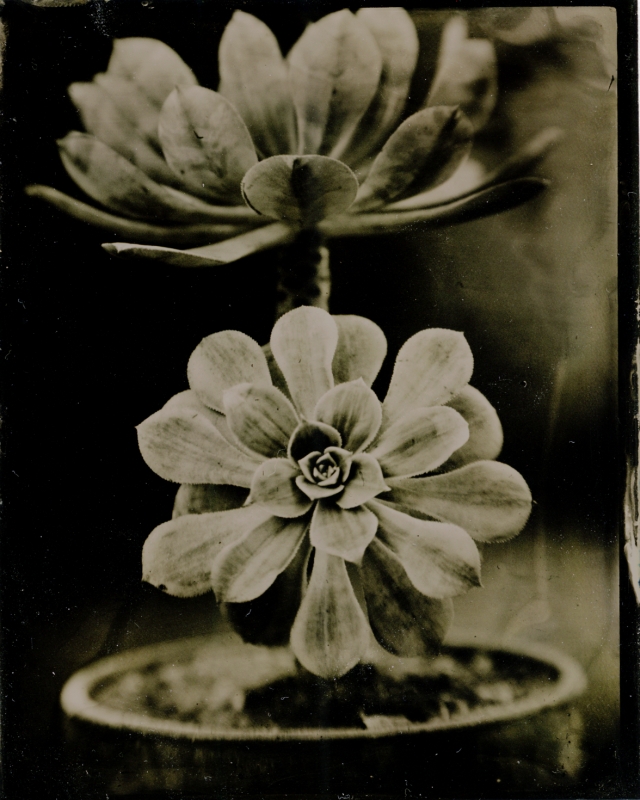
333mm Achromat Doublet lens 4x5 test
Surplus Sheed 333mm Cemented Achromat Doublet
35 seconds, 5:00 pm SoCal sun
OWH
KCN
I really need to clean my scanner. Given the slow speed of wet plate, there’s an abundance of lens formulas available at Surplus Shed for some collodion adventure.
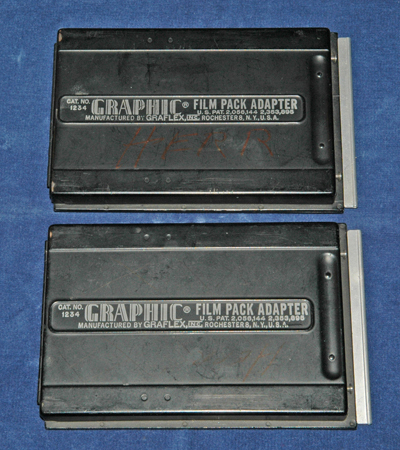
Scored two Graphic Film Pack Adapter #1234 from the big auction site and decided to see how easy it would be to modify it for wet plate work. After some judiciously sized and epoxied scrap aluminum sheets I went to try it out.
A test shot this afternoon passed the light fastness test.

Nikkor W 150mm, f/5.6 at 30 seconds
4×5 black aluminum
B&S OWH
KCN
Not bad for a $10 investment.

“No name” 8×10 W.A. Portable Symmetrical, f/22 exposed at 15 seconds
8×10 black aluminum
B&S OWH
KCN
Trying out my recently acquired Rembrandt Model I 5×7 camera.

Wollensak Verito 9″ at 50 seconds wide open
4″×6″ black aluminum
B&S OWH
KCN

Cooke 13″ at 6 seconds wide open
6″×8″ black aluminum
B&S quick clear collodion
KCN
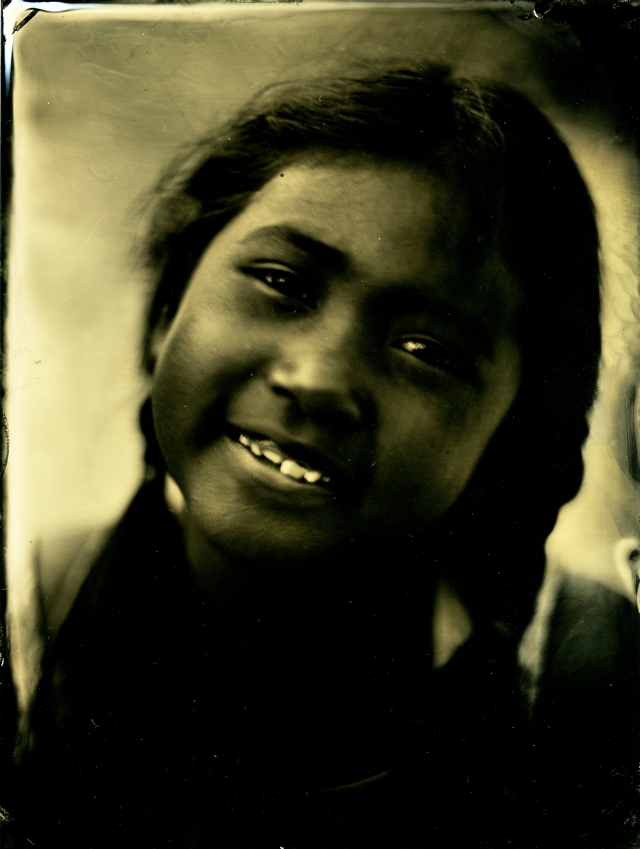
Cooke 13″ at 4 seconds wide open
6″×8″ black aluminum
B&S quick clear collodion
KCN
Here’s my submission to the 2012 WWPD. Not the best I’ve made but the best I made today.
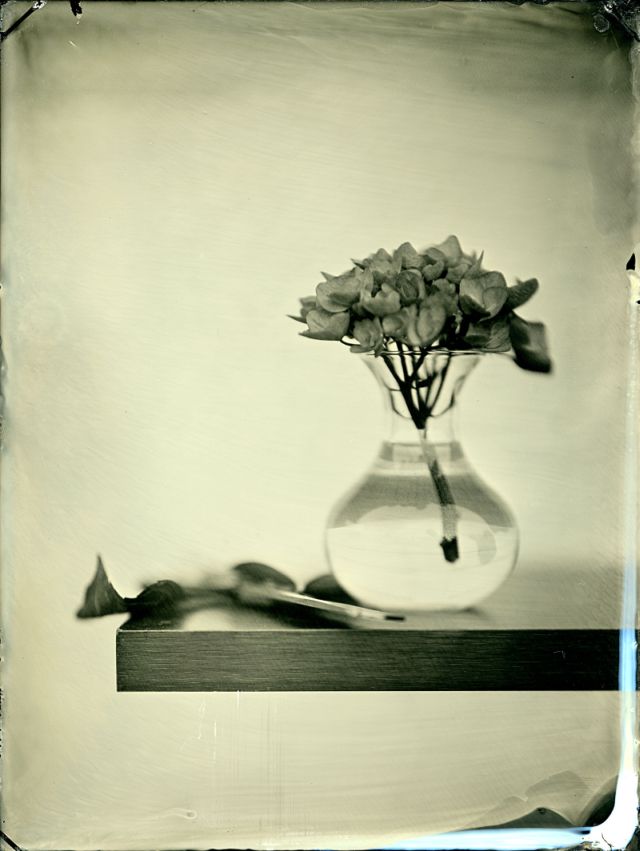
10″ B&L wide open for 5 seconds, 6×8 black aluminum with B&S version of Quinn’s quick clear, B&S Developer, KCN
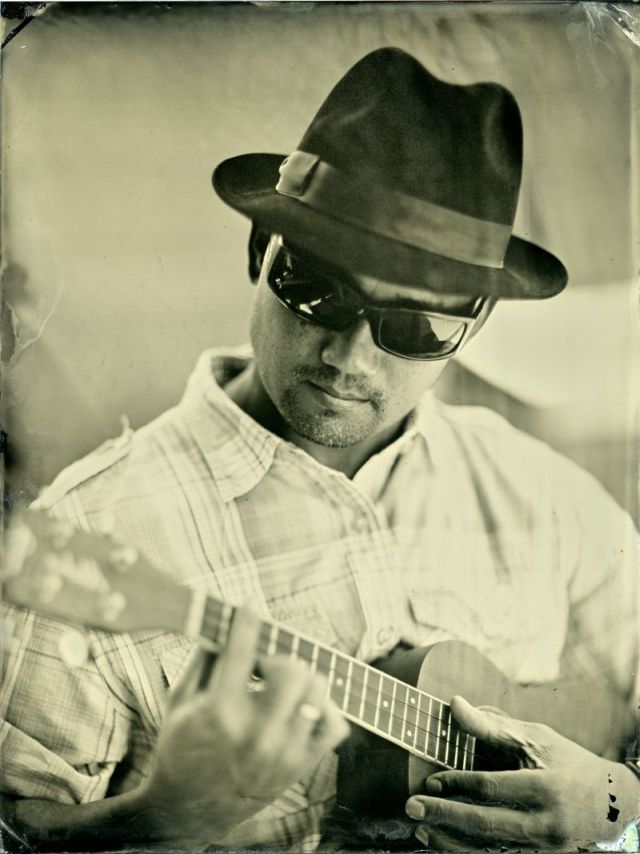
Cooke 13″ wide open 3 seconds, 6×8 black aluminum with B&S version of Quinn’s quick clear, B&S Developer, KCN

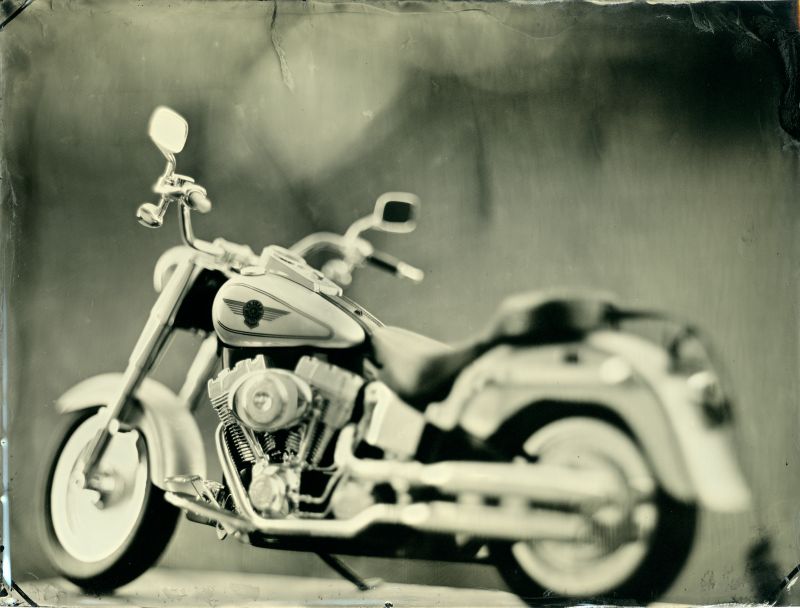
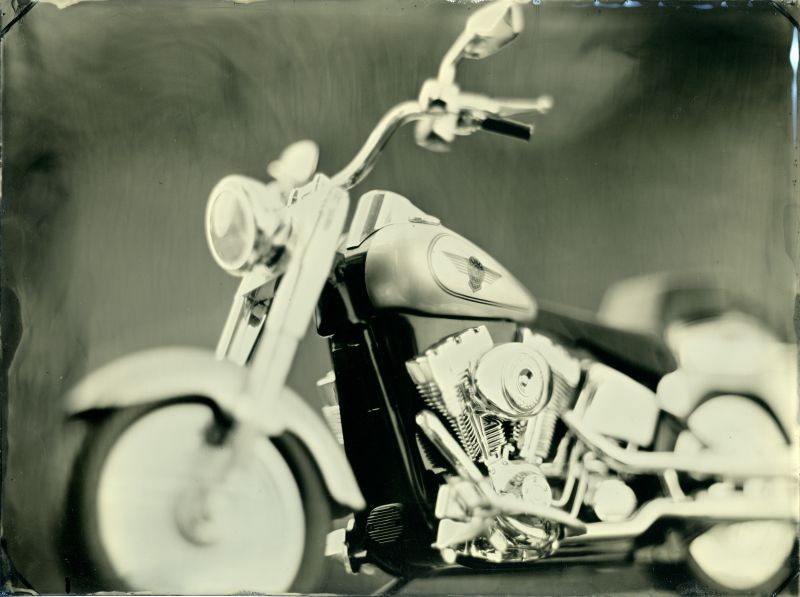
Cooke 13″ wide open 2 seconds, 6×8 black aluminum with B&S version of Quinn’s quick clear, B&S Developer, KCN
My first engagement session on tins. Here are the future Mr. and Mrs. Stanford.
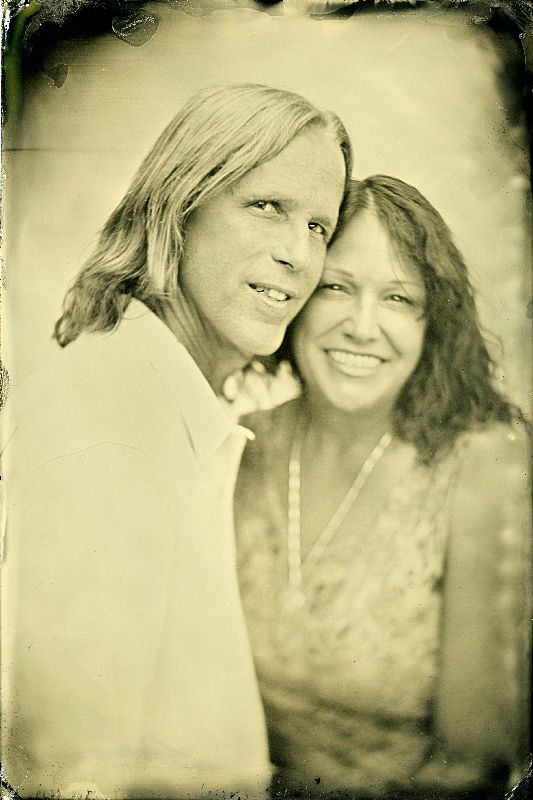
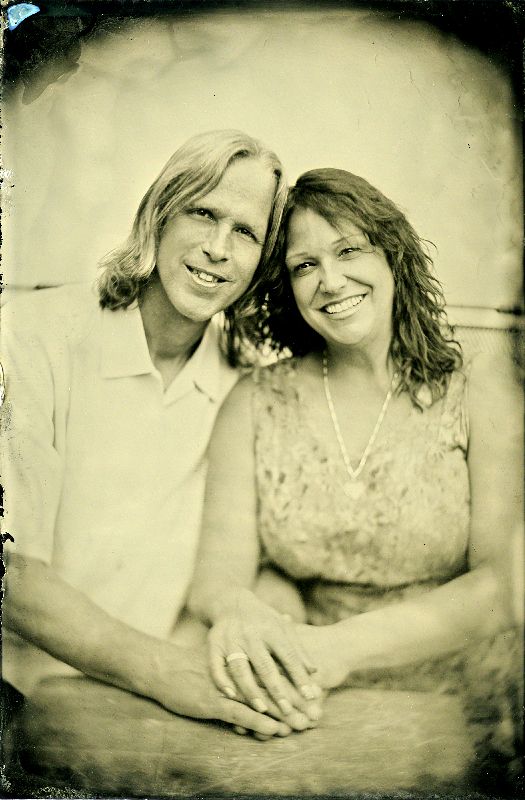
Holmes Booth & Hayden 1859 Half plate Petzval lens, 4×6 black aluminum with B&S Old Workhorse, B&S Developer, KCN

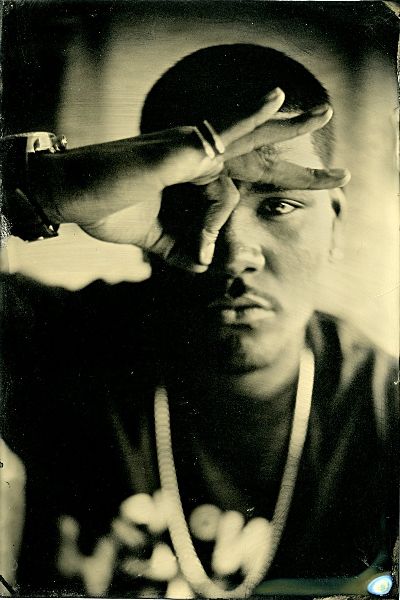
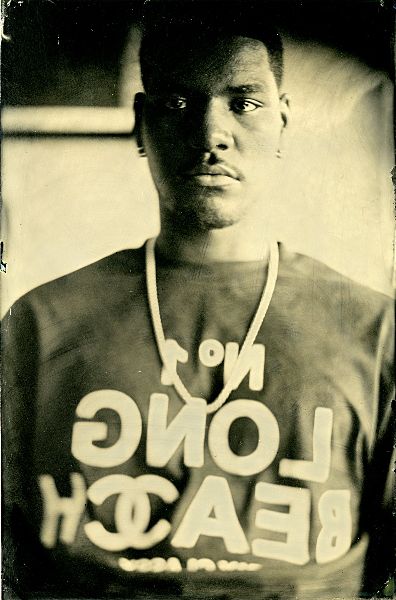
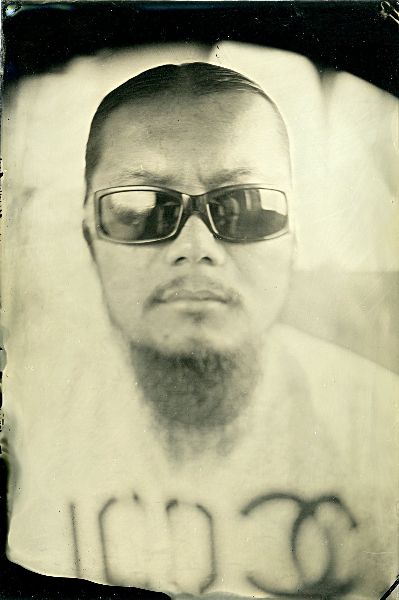
Holmes Booth & Hayden 1859 Half plate Petzval lens, 4×6 black aluminum with B&S Old Workhorse, B&S Developer, KCN
Thanks fellas’ for letting me try my lens.

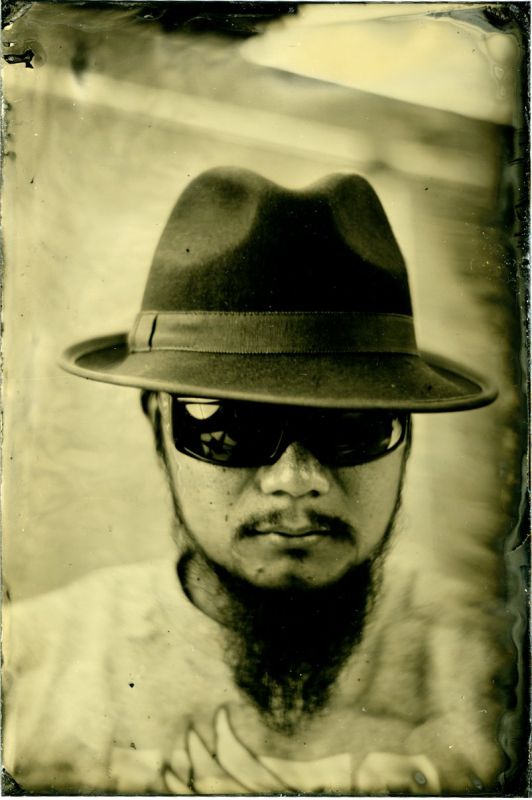
10″ A.T. Thompson, wide open, 7 seconds, 4×6 tin
Last year, I’ve acquired three “turn of the century (x2)” lenses and never had the opportunity to used them since I do not have a proper studio camera to mount them on. After talking to Will Dunniway on the first day of our collodion workshop regarding these lenses, he kindly offered to test all three of them for me. Here are his findings…
—————-
Many thanks to Randy Estudillo, owner of all these lenses used here in this visual and performance test.
The lenses ALL proved well, but two suffered some plate collodion issues. Read on>>>Will Dunniway
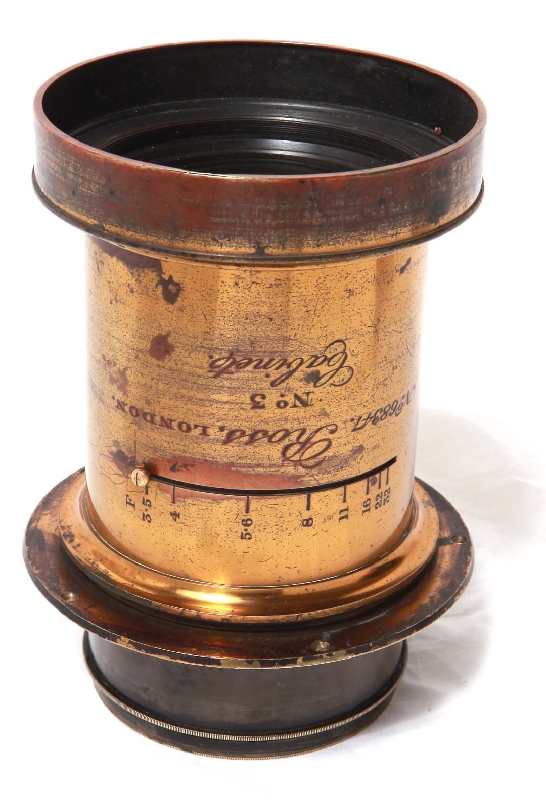
ROSS No. 3 Cabinet 8×10 lens. No.68347
The ROSS Cabinet No. 3 was spectacular. Matt Blais of Riverside, California posed for these images during a tutoring session. He is holding a tintype he made. It was cloudy the first day, then turned into a down pour of rain. My exposure in the rain was 22 second, wide open. The next day with no clouds or rain, it was 10 seconds, wide open with indirect light. Whole Plate Collodion glass negative
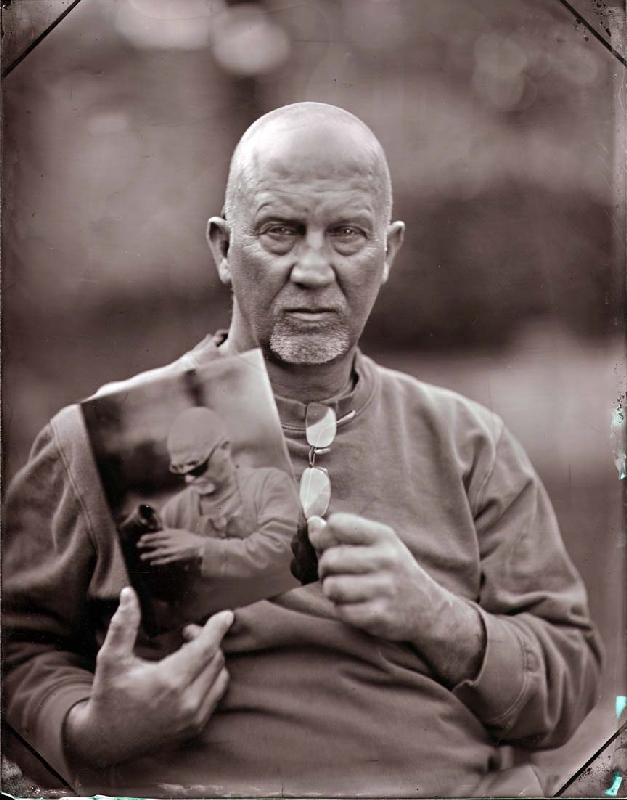
Matt Blais by Matt Blais. Tutoring image, collodion glass negative
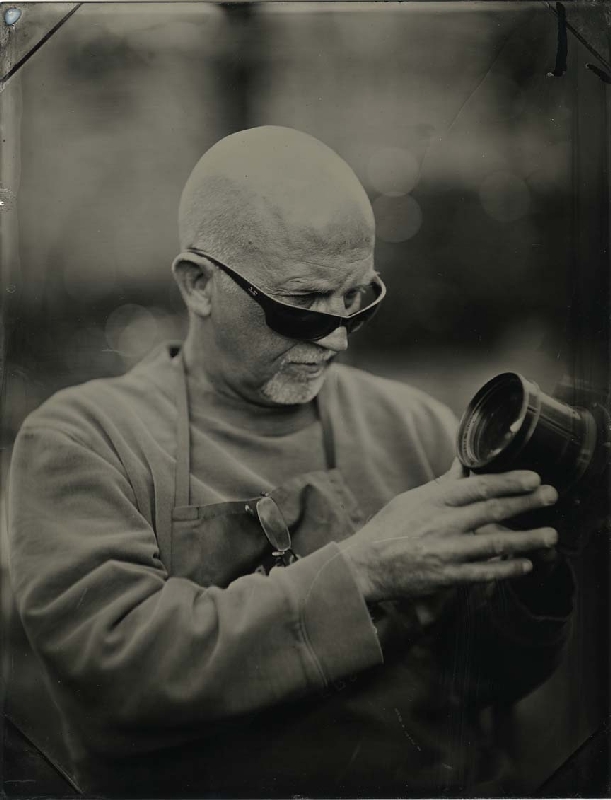
Matt Blais by Matt Blais. Tutoring image. Tintype
Taylor Taylor Hobson, Cooke, f4.5, Anastigmat, series II 8×10 lens soft focus, No. 21663
I made images with the Taylor Taylor Hobson – Cooke, 14 in BF., f4.5, Anastigmat, series II lens this week I only did a tintype because I did not have a sheet of glass this size ready and it was a last minute image on the fly. The image was perfect in the tray, but the highlights blocked out due to the ammonium in my bromide. I am dropping this from my collodion formula for a while because my images from time to time dry lighter. Great for landscapes, but this does not help with portraiture. Very frustrating. The new ammonium bromide I am using must have changed (this is a relative new problem) in the new batches I am being sold. More testing here.
This Cooke lens was mounted on my 12×10, 1875 English, Henry Moorse front board camera. It filled it with more image to spare – even though it is listed as a 8×10 plate lens. It has a 14″ BF. i.e. a 12×10 + plate lens with soft focus built in. My exposure was f8 at 15 second. Very, very nice lens despite the highlights being a tad over-exposed in the dry off. I wish this lens was mine.
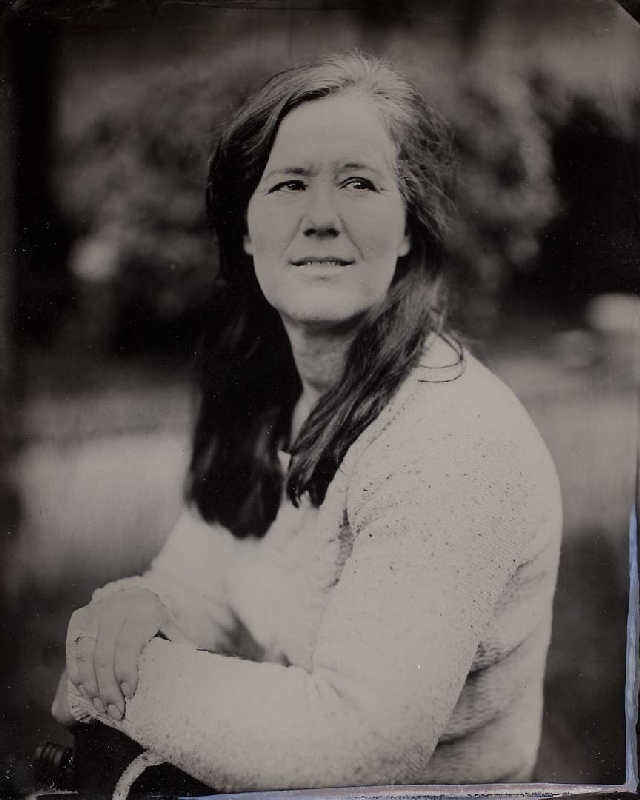
My wife. Frances Dunniway by Will Dunniway. 12×10 tintype.
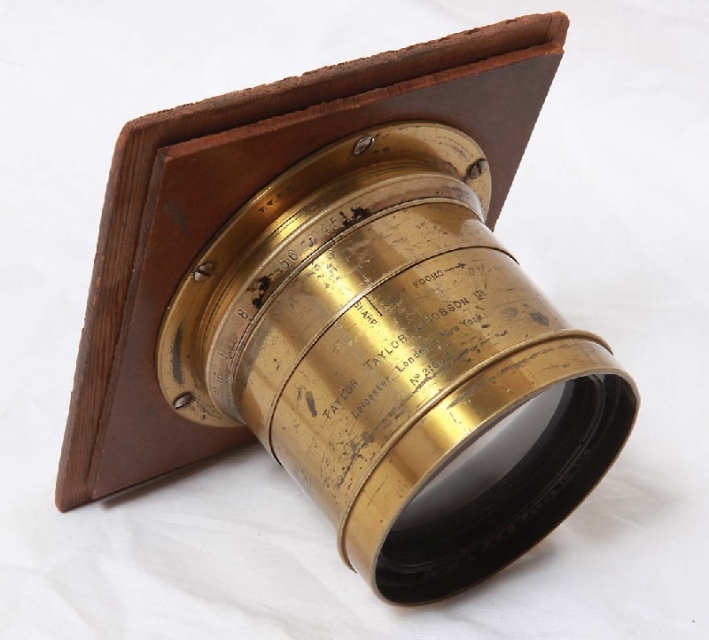
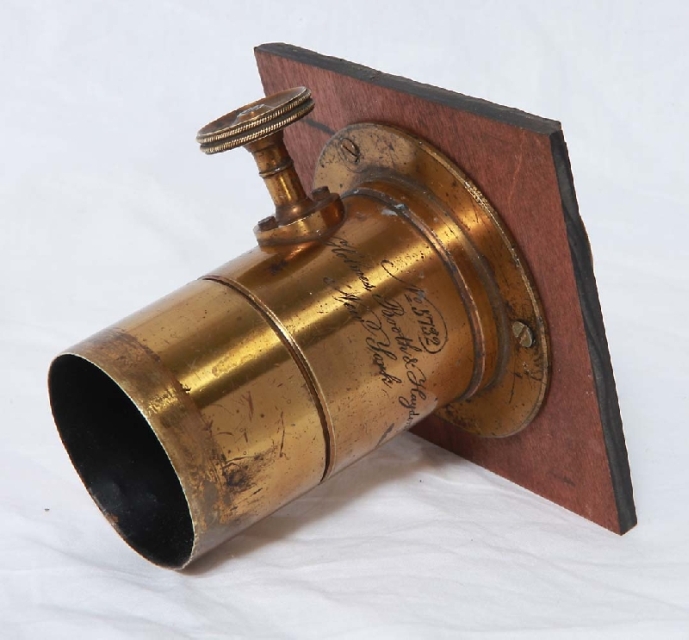
Holmes Booth & Hayden 1859 Half plate Petzval lens. No. 5732
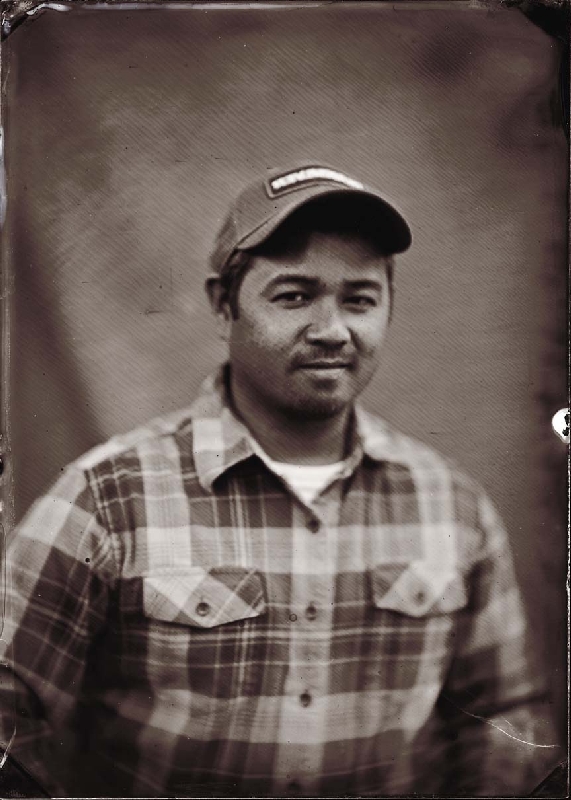
Randy Estudillo by Randy Estudillo in workshop with Will Dunniway. Whole plate collodion glass negative
This is another one of those sweet Holmes Booth & Hayden, New York made petzval lenses. It is the kind of optic that once you own it, you should never sell it.
This workshop collodion glass negative image is not representative of it’s performance at all, but it is all I have. Randy took the lens home. This collodion glass negatives detail and its nice sweet spot was muted by using a ‘green collodion’ that was cloudy and had too much water in it. This caused the ‘crepe’ lines throughout the image. I need to spend some more time with this jewel of brass and glass.
Exposure was 10 seconds wide open. The lens is a half plate that was made around 1859-60.
Will Dunniway
2188 Turnberry Lane
Corona, CA 92881-7439
http://www.collodion-artist.com
Many thanks to Randy Estudillo, owner of all these lenses used here in this visual and performance test.
The lenses ALL proved well, but two suffered some plate collodion issues. Read on>>>Will Dunniway
ROSS No. 3 Cabinet 8×10 lens. No.68347
The ROSS Cabinet No. 3 was spectacular. Matt Blais of Riverside, California posed for these images during a tutoring session. He is holding a tintype he made. It was cloudy the first day, then turned into a down pour of rain. My exposure in the rain was 22 second, wide open. The next day with no clouds or rain, it was 10 seconds, wide open with indirect light. Whole Plate Collodion glass negative

Matt Blais by Matt Blais. Tutoring image, collodion glass negative

Matt Blais by Matt Blais. Tutoring image. Tintype

Taylor Taylor Hobson, Cooke, f4.5, Anastigmat, series II 8×10 lens soft focus, No. 21663
I made images with the Taylor Taylor Hobson – Cooke, 14 in BF., f4.5, Anastigmat, series II lens this week I only did a tintype because I did not have a sheet of glass this size ready and it was a last minute image on the fly. The image was perfect in the tray, but the highlights blocked out due to the ammonium in my bromide. I am dropping this from my collodion formula for a while because my images from time to time dry lighter. Great for landscapes, but this does not help with portraiture. Very frustrating. The new ammonium bromide I am using must have changed (this is a relative new problem) in the new batches I am being sold. More testing here.
This Cooke lens was mounted on my 12×10, 1875 English, Henry Moorse front board camera. It filled it with more image to spare – even though it is listed as a 8×10 plate lens. It has a 14″ BF. i.e. a 12×10 + plate lens with soft focus built in. My exposure was f8 at 15 second. Very, very nice lens despite the highlights being a tad over-exposed in the dry off. I wish this lens was mine.

My wife. Frances Dunniway by Will Dunniway. 12×10 tintype.

Holmes Booth & Hayden 1859 Half plate Petzval lens. No. 5732

Randy Estudillo by Randy Estudillo in workshop with Will Dunniway. Whole plate collodion glass negative
This is another one of those sweet Holmes Booth & Hayden, New York made petzval lenses. It is the kind of optic that once you own it, you should never sell it.
This workshop collodion glass negative image is not representative of it’s performance at all, but it is all I have. Randy took the lens home. This collodion glass negatives detail and its nice sweet spot was muted by using a ‘green collodion’ that was cloudy and had too much water in it. This caused the ‘crepe’ lines throughout the image. I need to spend some more time with this jewel of brass and glass.
Exposure was 10 seconds wide open. The lens is a half plate that was made around 1859-60.

Will Dunniway
2188 Turnberry Lane
Corona, CA 92881-7439
951-264-9839 Cell