Jun
15
2014
Los Osos 2014

5×7 HP5+Fujinon 180mm
XTOL
Scanned
I’ve been meaning to take pictures of a cala lily (aka. “Z. elliottiana”) and Home Depot was on my way home from an errand; I was fortunate to find the yellow variety.

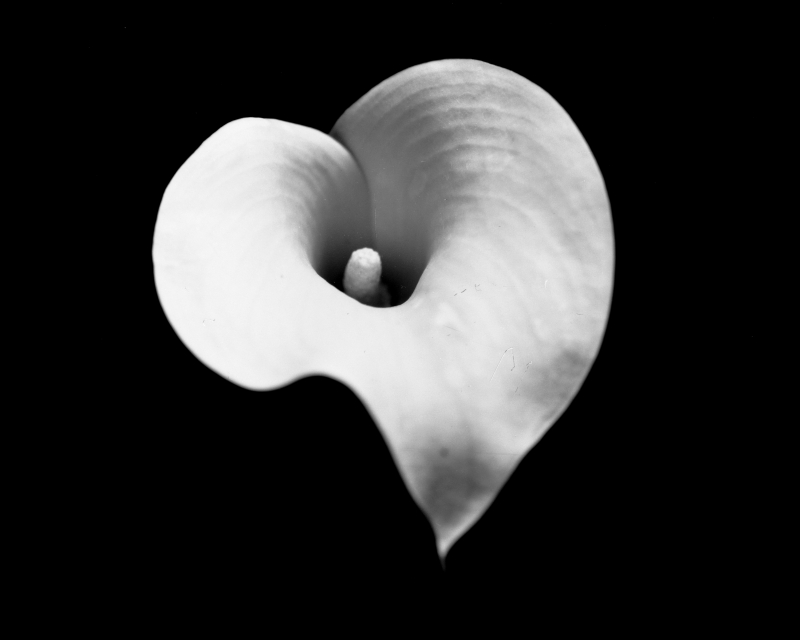
It gave me an opportunity to try the CSX green sensitive X-ray film rated at ISO 80. These were taken using the Zone VI 8×10 camera and Kodak CE 300mm, strobed with the 580EX II camera left at full power. I believe the shutter was set to 1/150 and the aperture was F16. I also shot it in 4×5 format with AEU100 film for silver gelatin enlargements.
Both images were film scanned but I intend to print a few of these in carbon and platinum-palladium once I find a few I like.
So we decided to head out to Long Beach and take a night time shot of the Queen Mary. It’s a good opportunity to try out my new “old” 1920′s 5×7 Korona large format camera with the 1951 Kodak Commercial Ektar 12 inch (~305mm) lens. Grabbed some film, tripod, shutter cable and my dark cloth – here’s a film scan of what I saw.
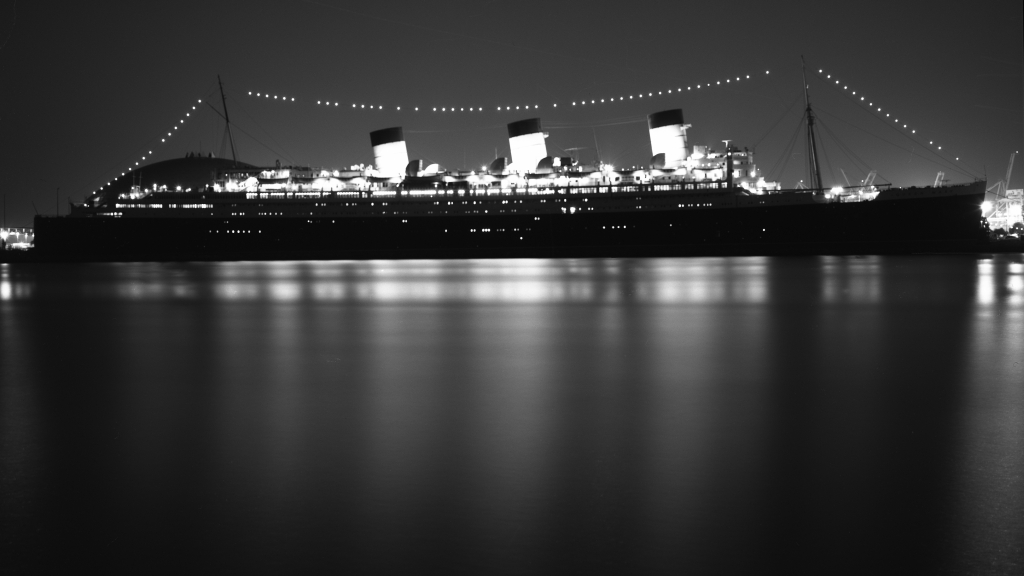
It turns out, the Kodak CE was too long from our vantage but luckily I brought the Schneider 240mm lens and the field of view barely covered from bow to stern.
I used Arista’s EDU Ultra 100 film (re-branded Fomapan 100, manufactured in Czech Republic) and it’s notorious for reciprocity failure at exposures greater than 1 second. Proper exposure at F16 during this time was 30 seconds so I cooked it for 10 minutes (a wild estimate).
Whenever a patrol boat or a cruise ship would cross by the shot I just covered the lens with the dark slide and compensated for more time, a benefit of long exposures. Once I got home, I souped it in Rodinal 1:50 for 8 minutes with the Jobo drum.
Next time I’m bringing the 75mm so that I can use my home made 5×7 to 4×5 reducing back.
Interesting read…
http://www.nytimes.com/2010/03/30/business/media/30photogs.html?hp
This article is about the collision between pro photographers and amateur stock photographers, all because of digital cameras. I think it comes down to the following…
Film + Darkroom Work = Art Photography
Digital Camera + Photoshop Processing = Photojournalism
…at least more so now.
Painting is one of the hardest medium to learn but the easiest to identify with the artist. On the other, with photography it’s always been difficult to identify between the artists and their photography, yet it is the easiest medium to learn. Digital photography blurs that line further.
Well… finally got around to print one for APUG’s BPX10 assignment – this one is going to France. It’s a snap of Darwin Falls near Death Valley, a waterfall at the edge of the desert can you believe that?

Printed on 8×10 Arista EDU Ultra Glossy VC Fiber Paper, dipped and dunked in Dektol, then fixed on Kentmere’s liquid fixer.
I recently participated in APUG’s Blind Print Exchange program where analog photographer’s blindly exchange prints (like a Christmas White Elephant). The sole criteria is, the print from conception to creation must be completely analog. They are now on round 10 and I’m happy to say I received my print.

The prints you get are exceptional both in image composition and print quality. It gives me the opportunity to see what other people do with film photography. The last round of BPX, I received a palatinum/palladium print – a print process I am yearning to learn. It’s very expensive because of the materials use to make the emulsion, but the image quality you get is unbelievable.