The Queen at night
So we decided to head out to Long Beach and take a night time shot of the Queen Mary. It’s a good opportunity to try out my new “old” 1920′s 5×7 Korona large format camera with the 1951 Kodak Commercial Ektar 12 inch (~305mm) lens. Grabbed some film, tripod, shutter cable and my dark cloth – here’s a film scan of what I saw.
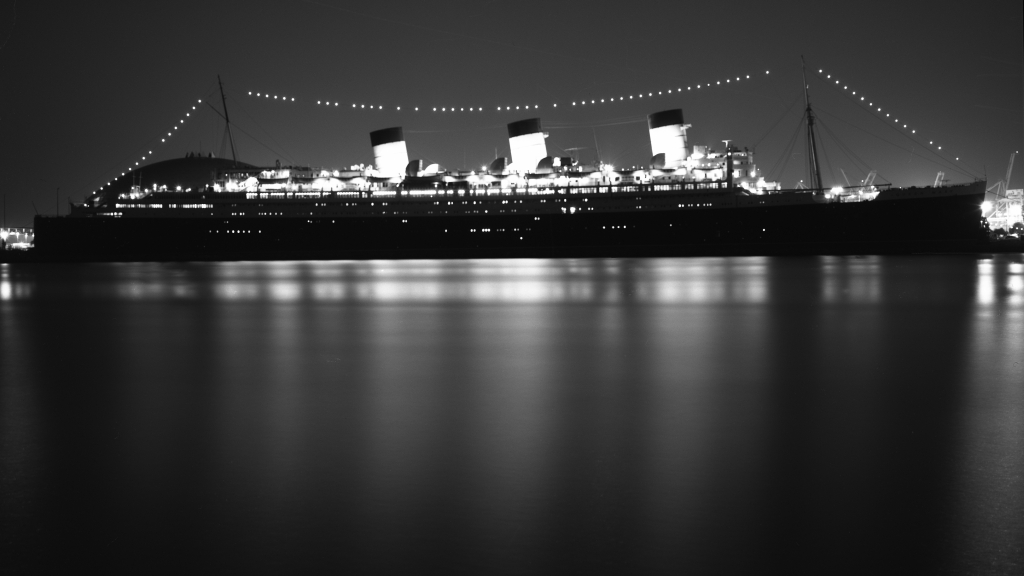
It turns out, the Kodak CE was too long from our vantage but luckily I brought the Schneider 240mm lens and the field of view barely covered from bow to stern.
I used Arista’s EDU Ultra 100 film (re-branded Fomapan 100, manufactured in Czech Republic) and it’s notorious for reciprocity failure at exposures greater than 1 second. Proper exposure at F16 during this time was 30 seconds so I cooked it for 10 minutes (a wild estimate).
Whenever a patrol boat or a cruise ship would cross by the shot I just covered the lens with the dark slide and compensated for more time, a benefit of long exposures. Once I got home, I souped it in Rodinal 1:50 for 8 minutes with the Jobo drum.
Next time I’m bringing the 75mm so that I can use my home made 5×7 to 4×5 reducing back.