Nov
21
2012
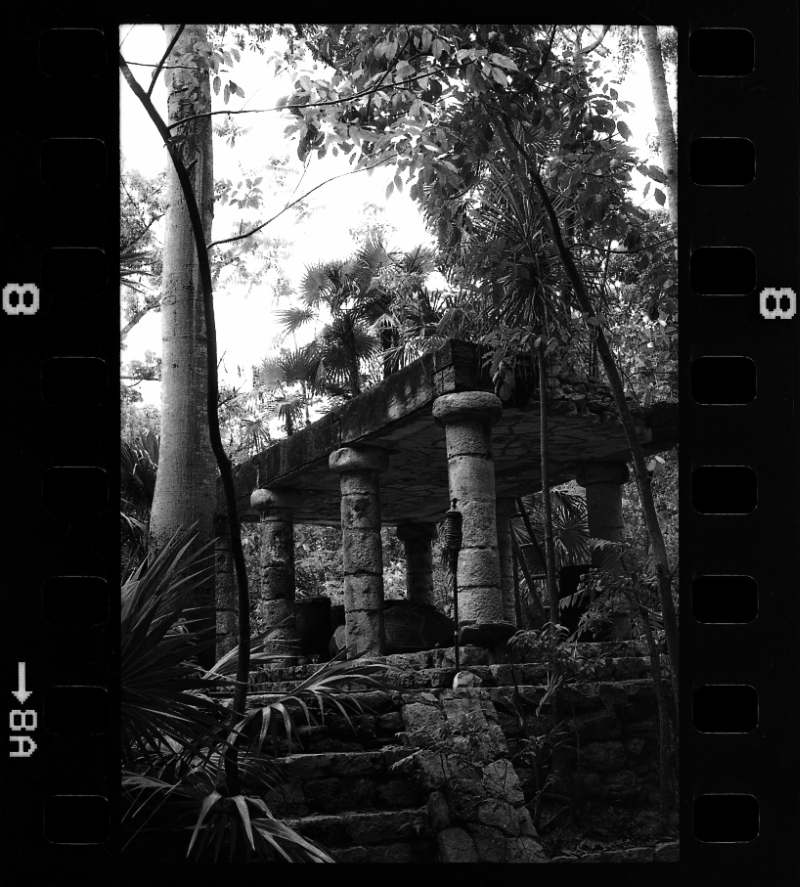
Old Pariah Road

“No name” 8×10 W.A. Portable Symmetrical, f/22 exposed at 15 seconds
8×10 black aluminum
B&S OWH
KCN
“No name” 8×10 W.A. Portable Symmetrical, f/22 exposed at 15 seconds
8×10 black aluminum
B&S OWH
KCN

Mike took the Ansel Adam method and applied it at JT’s Geology Tour Road with my Cherokee. The cargo rack was surprisingly supportive, though it needs a slab of plywood to prevent the metal grates from sagging.
We found some interesting rocks – I’ll post those later after I make some more developer.
My first daguerreotype, under Dan Carrillo’s supervision.

Dan was kind enough to spend a couple of days with me, despite being busy with a new born, to show his Dag process.
Trying out my recently acquired Rembrandt Model I 5×7 camera.

Wollensak Verito 9″ at 50 seconds wide open
4″×6″ black aluminum
B&S OWH
KCN
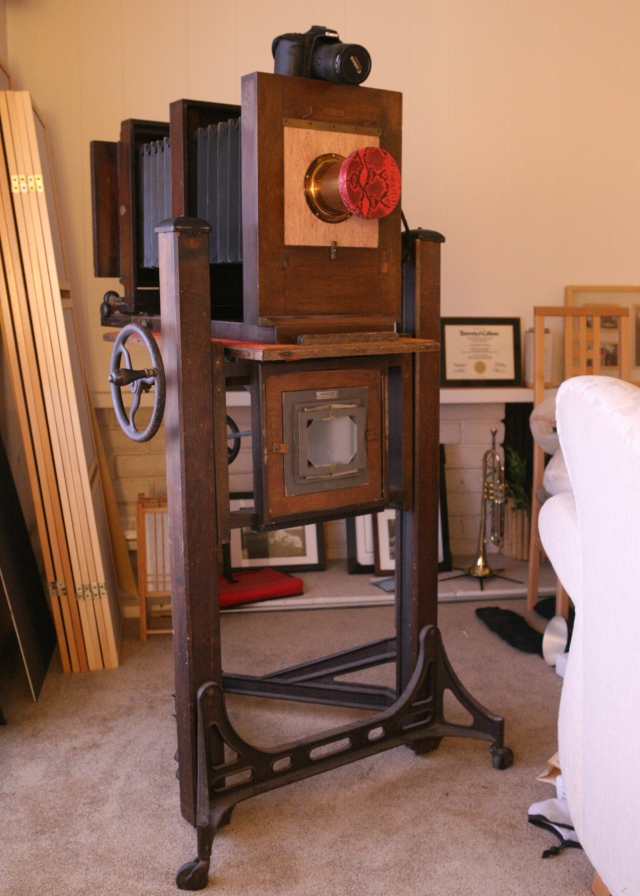
My name is George.
“Just what I always wanted! My own little bunny rabbit ‘studio camera’. I will name him George and I will hug him and pet him and squeeze him…”
Muah, ha, ha, ha, ha,… I finally got my dream camera! An Ansco 8×10 Studio camera.
It’s an amazing piece of 1940′s furniture. The stand is rock solid and the camera has THREE standards and TWO bellows! I love the rise and tilt gears; the bellows extend beyond anything I can put on this. The lens board is a whopping 9 inches of real estate and will take on any known studio lens. I mounted my Ross No. 3 and it didn’t even flinch.
The seller mentioned Walt Disney used to own it but has no documentation to prove it. However, the stand and camera has a matching serial number – if I have time I’ll look into it’s provenance.
I can’t wait to use George!

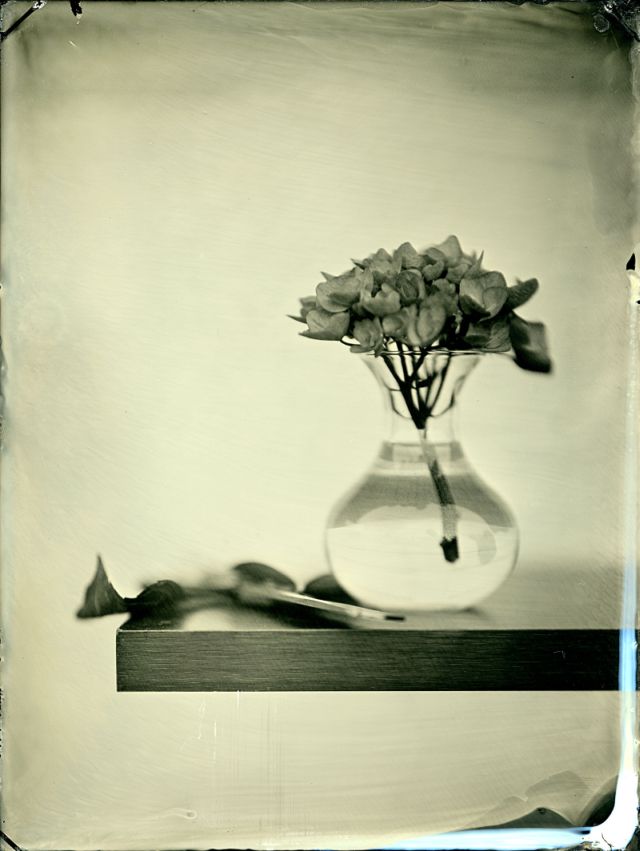
Cooke 13″ at 6 seconds wide open
6″×8″ black aluminum
B&S quick clear collodion
KCN
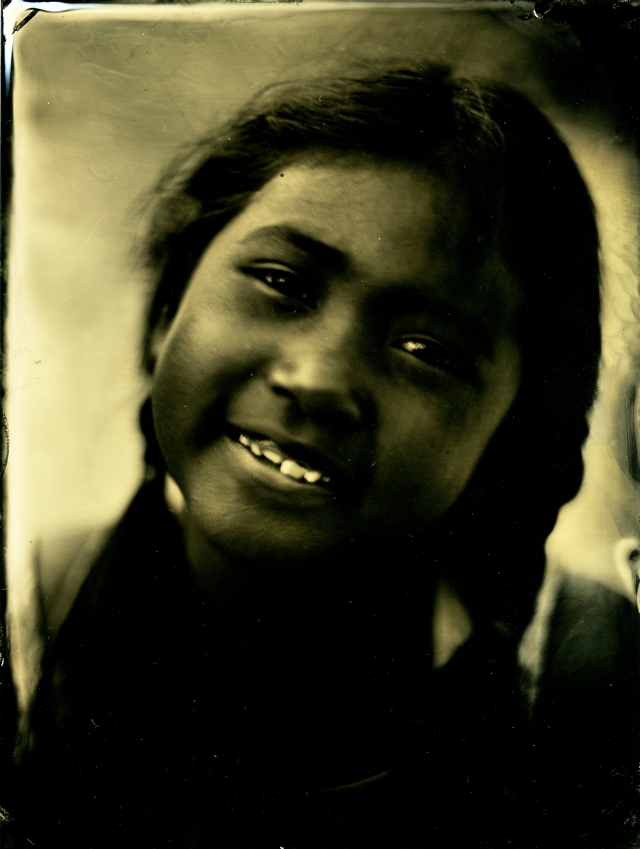
Cooke 13″ at 4 seconds wide open
6″×8″ black aluminum
B&S quick clear collodion
KCN
Here’s my submission to the 2012 WWPD. Not the best I’ve made but the best I made today.
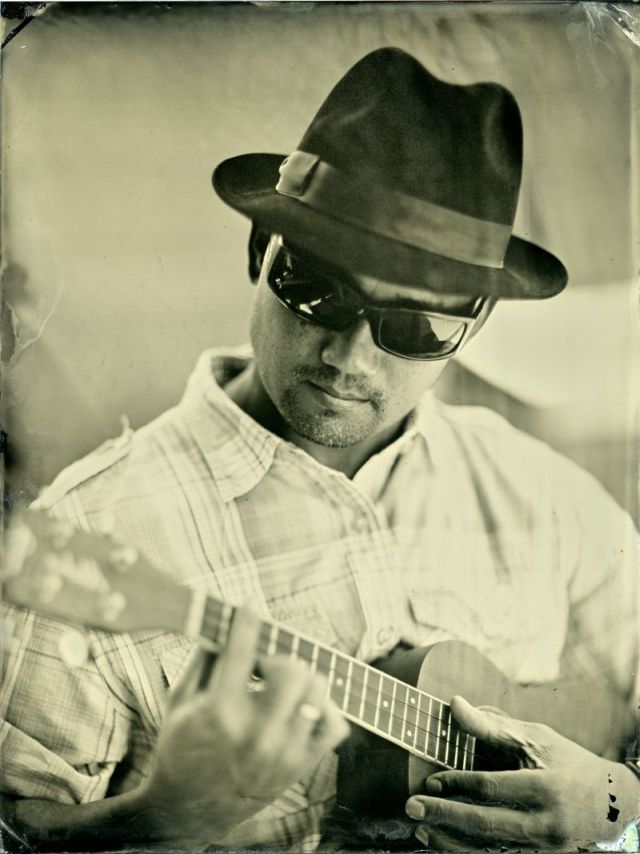
10″ B&L wide open for 5 seconds, 6×8 black aluminum with B&S version of Quinn’s quick clear, B&S Developer, KCN
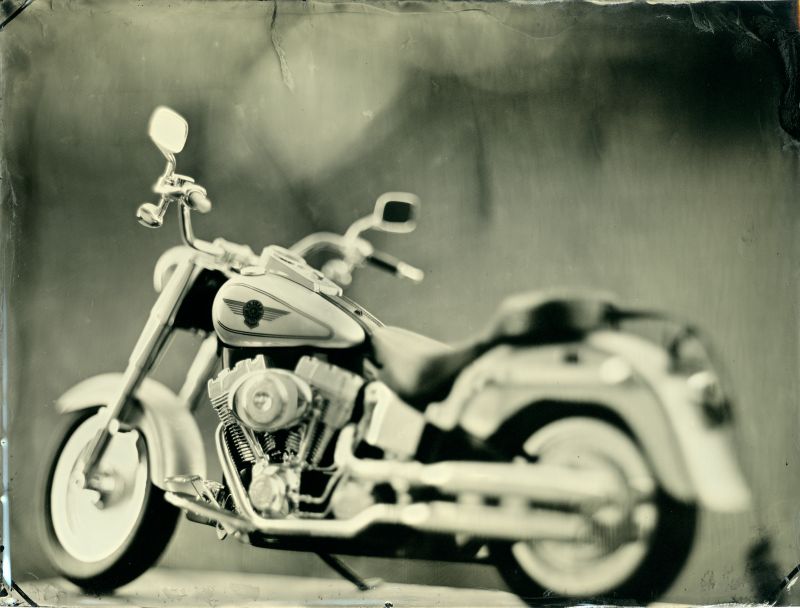
Cooke 13″ wide open 3 seconds, 6×8 black aluminum with B&S version of Quinn’s quick clear, B&S Developer, KCN

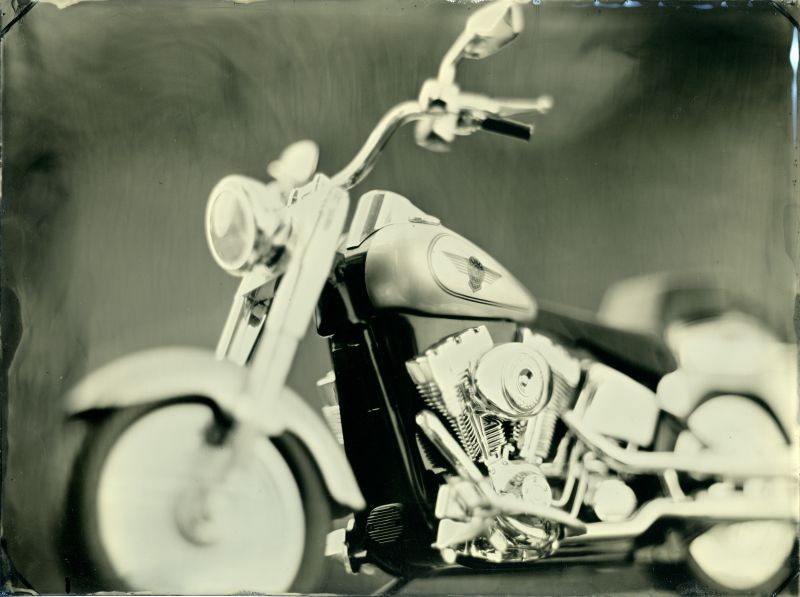
Cooke 13″ wide open 2 seconds, 6×8 black aluminum with B&S version of Quinn’s quick clear, B&S Developer, KCN
My first engagement session on tins. Here are the future Mr. and Mrs. Stanford.
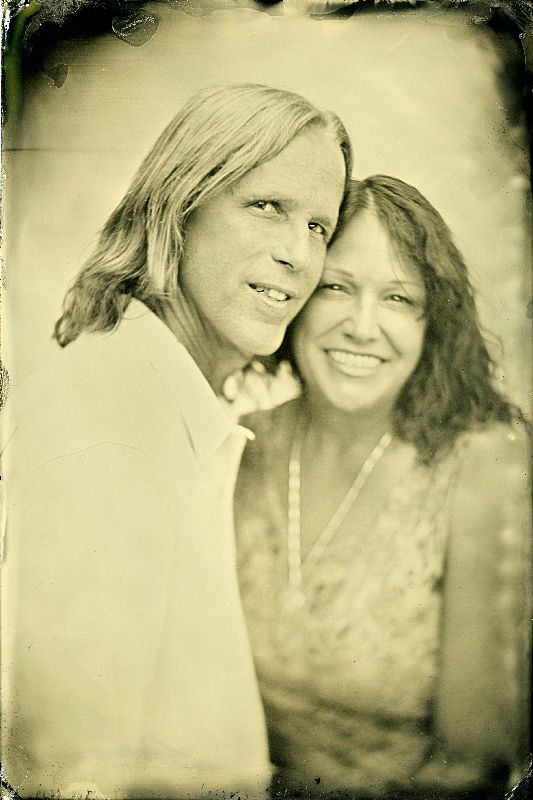
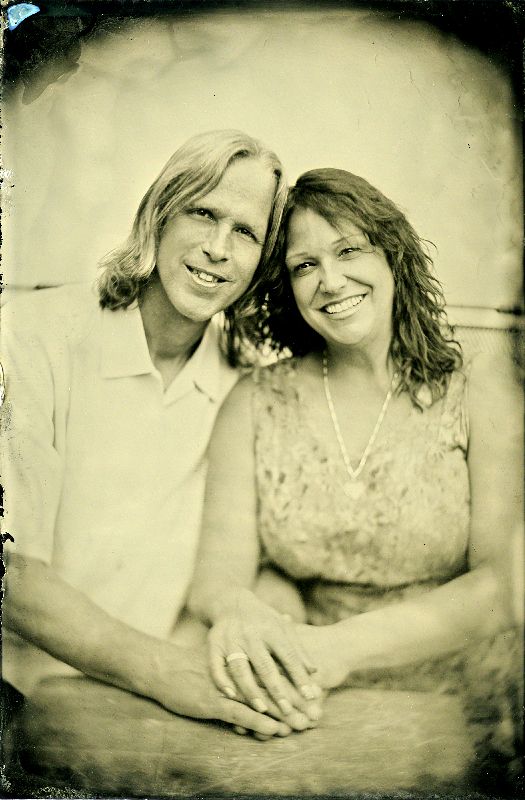
Holmes Booth & Hayden 1859 Half plate Petzval lens, 4×6 black aluminum with B&S Old Workhorse, B&S Developer, KCN

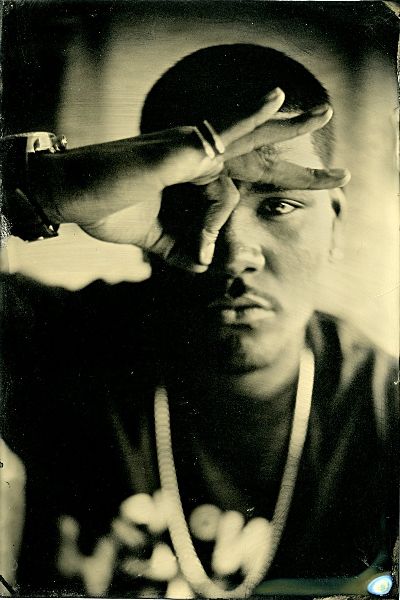
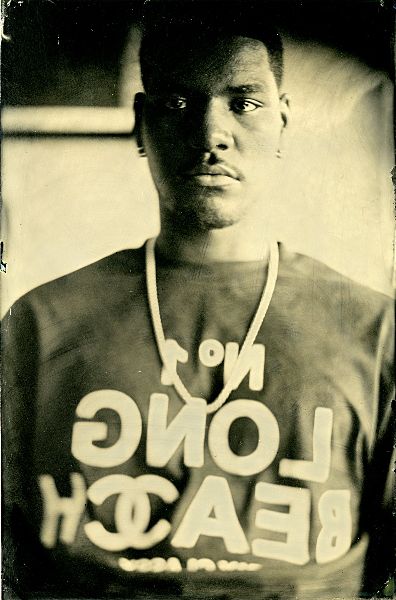
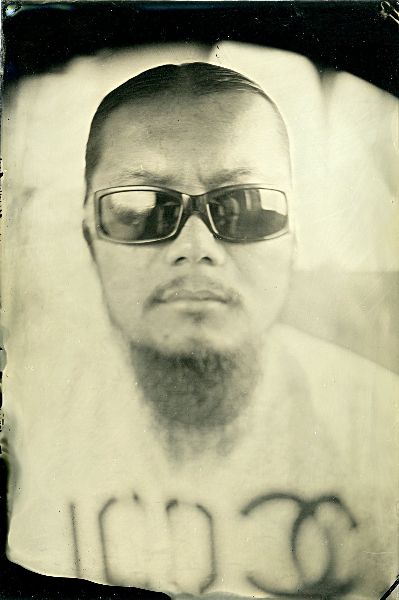
Holmes Booth & Hayden 1859 Half plate Petzval lens, 4×6 black aluminum with B&S Old Workhorse, B&S Developer, KCN
Thanks fellas’ for letting me try my lens.

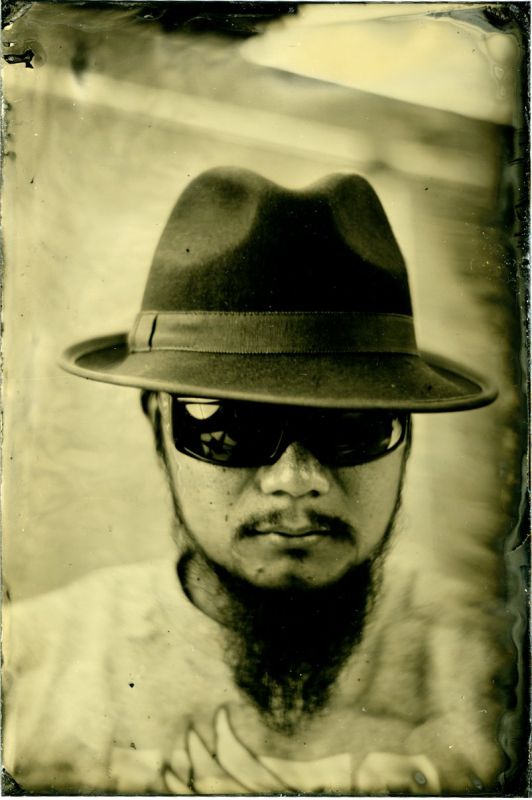
10″ A.T. Thompson, wide open, 7 seconds, 4×6 tin
After strumming my guitar and putting it back on the stand I noticed something that was staring at me the whole time - the head on my guitar stand is removable.
With a light stand, an umbrella/hot shoe mount, a super clamp (or flashpoint clamp), and a guitar stand – I rigged this up.
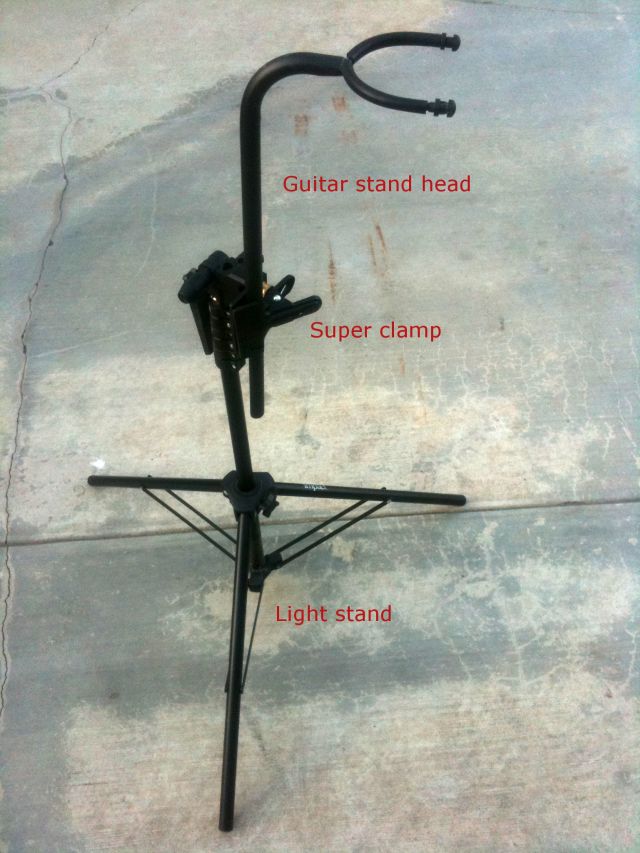
Claude Levet makes a functional and beautiful head rest. It’s hard for me to convince my wife that I need one. One day I’ll save enough money and buy a proper brace. In the mean time, this will have to do. It’s probably been done before but just wanted to share a moment of enlightenment. =D
Last year, I’ve acquired three “turn of the century (x2)” lenses and never had the opportunity to used them since I do not have a proper studio camera to mount them on. After talking to Will Dunniway on the first day of our collodion workshop regarding these lenses, he kindly offered to test all three of them for me. Here are his findings…
—————-
Many thanks to Randy Estudillo, owner of all these lenses used here in this visual and performance test.
The lenses ALL proved well, but two suffered some plate collodion issues. Read on>>>Will Dunniway
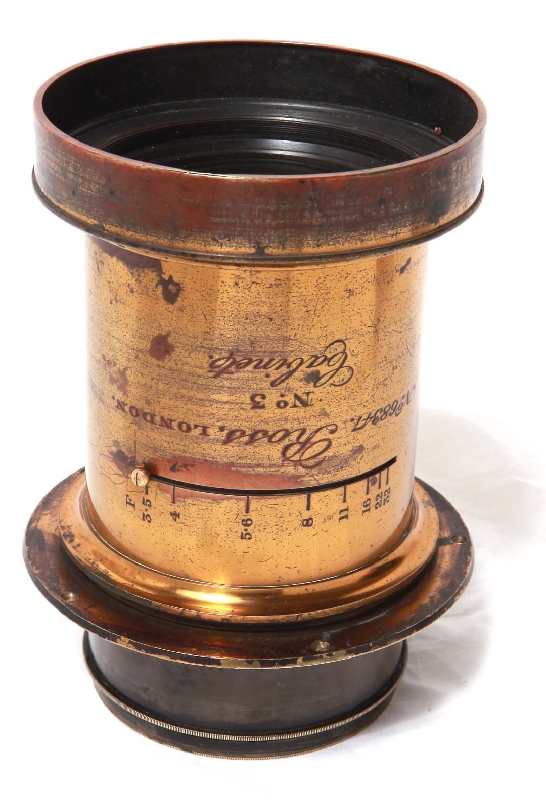
ROSS No. 3 Cabinet 8×10 lens. No.68347
The ROSS Cabinet No. 3 was spectacular. Matt Blais of Riverside, California posed for these images during a tutoring session. He is holding a tintype he made. It was cloudy the first day, then turned into a down pour of rain. My exposure in the rain was 22 second, wide open. The next day with no clouds or rain, it was 10 seconds, wide open with indirect light. Whole Plate Collodion glass negative
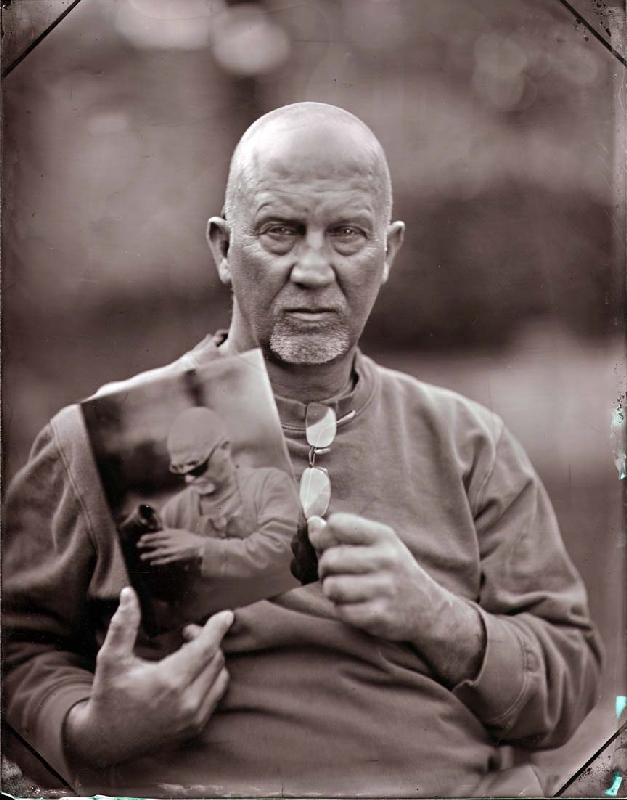
Matt Blais by Matt Blais. Tutoring image, collodion glass negative
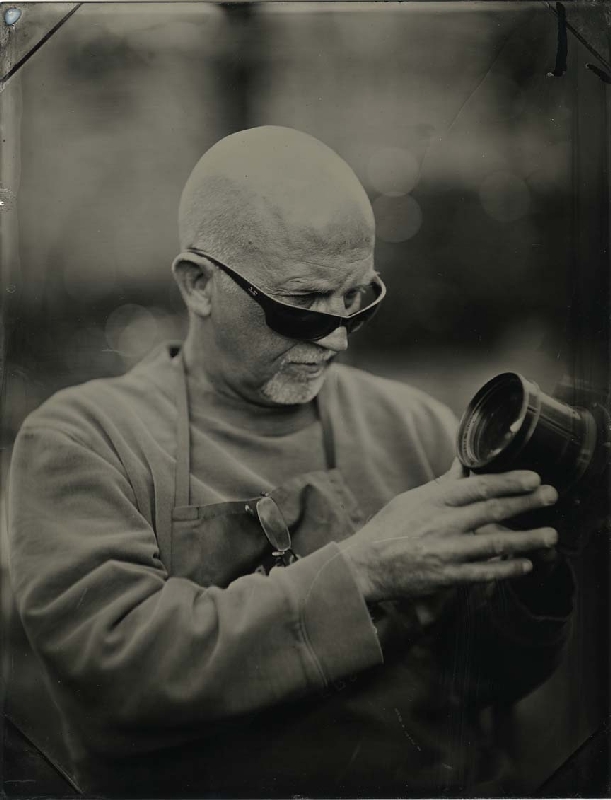
Matt Blais by Matt Blais. Tutoring image. Tintype
Taylor Taylor Hobson, Cooke, f4.5, Anastigmat, series II 8×10 lens soft focus, No. 21663
I made images with the Taylor Taylor Hobson – Cooke, 14 in BF., f4.5, Anastigmat, series II lens this week I only did a tintype because I did not have a sheet of glass this size ready and it was a last minute image on the fly. The image was perfect in the tray, but the highlights blocked out due to the ammonium in my bromide. I am dropping this from my collodion formula for a while because my images from time to time dry lighter. Great for landscapes, but this does not help with portraiture. Very frustrating. The new ammonium bromide I am using must have changed (this is a relative new problem) in the new batches I am being sold. More testing here.
This Cooke lens was mounted on my 12×10, 1875 English, Henry Moorse front board camera. It filled it with more image to spare – even though it is listed as a 8×10 plate lens. It has a 14″ BF. i.e. a 12×10 + plate lens with soft focus built in. My exposure was f8 at 15 second. Very, very nice lens despite the highlights being a tad over-exposed in the dry off. I wish this lens was mine.
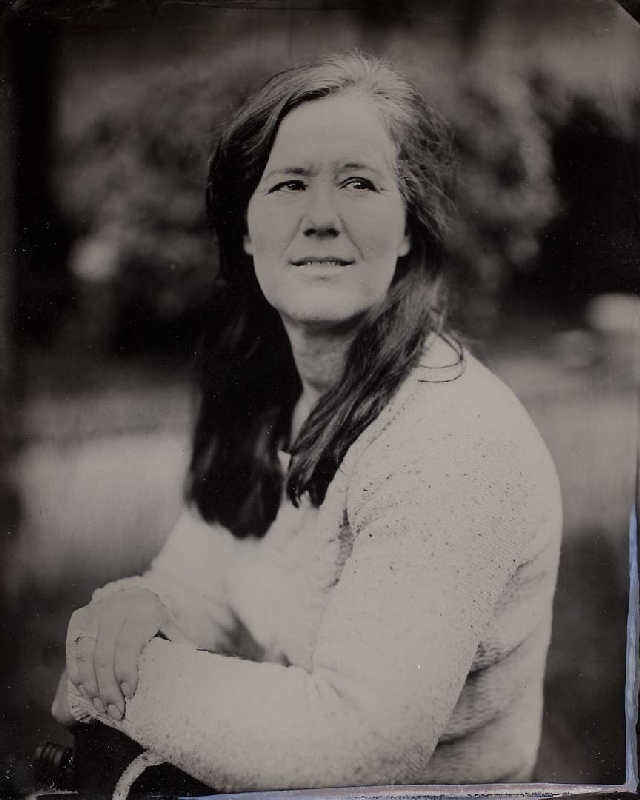
My wife. Frances Dunniway by Will Dunniway. 12×10 tintype.
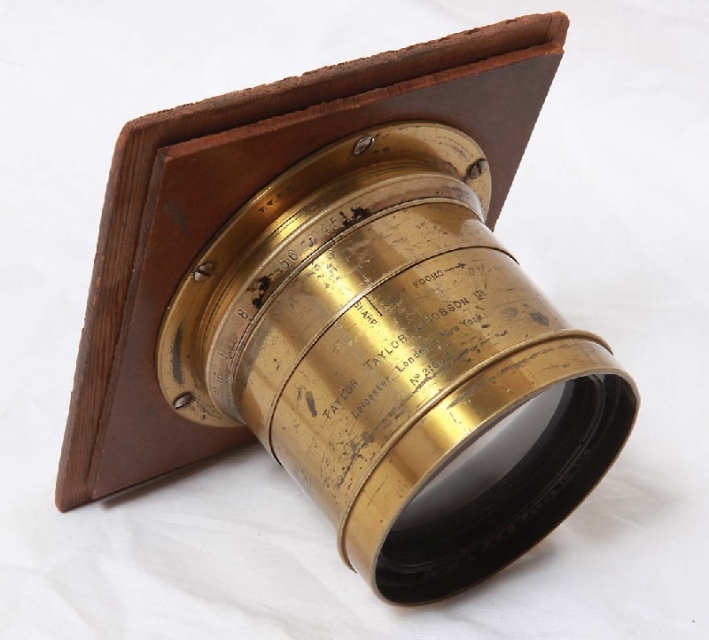
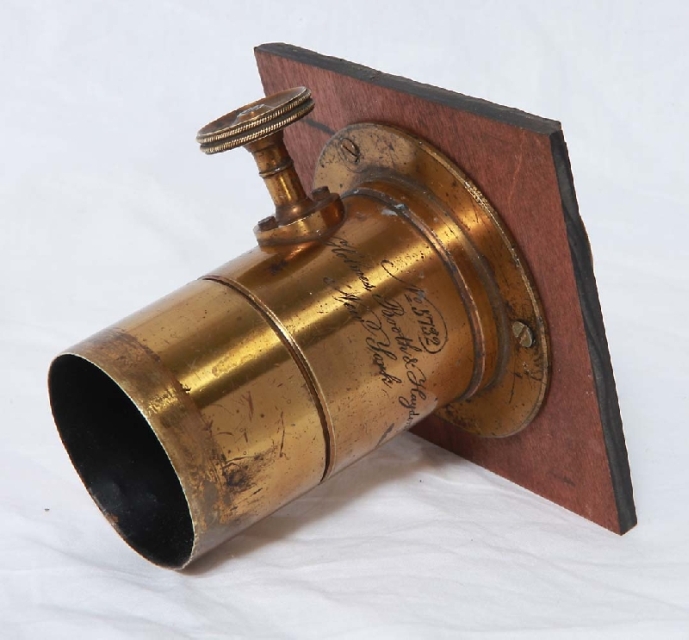
Holmes Booth & Hayden 1859 Half plate Petzval lens. No. 5732
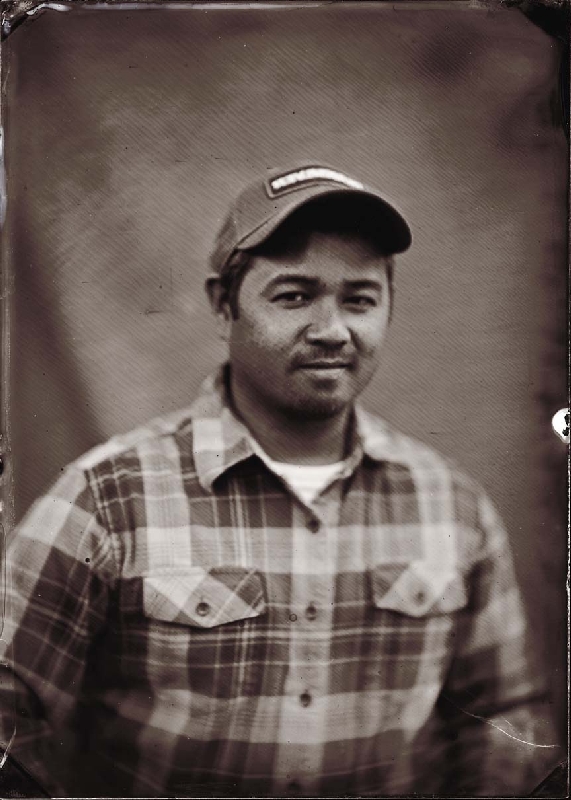
Randy Estudillo by Randy Estudillo in workshop with Will Dunniway. Whole plate collodion glass negative
This is another one of those sweet Holmes Booth & Hayden, New York made petzval lenses. It is the kind of optic that once you own it, you should never sell it.
This workshop collodion glass negative image is not representative of it’s performance at all, but it is all I have. Randy took the lens home. This collodion glass negatives detail and its nice sweet spot was muted by using a ‘green collodion’ that was cloudy and had too much water in it. This caused the ‘crepe’ lines throughout the image. I need to spend some more time with this jewel of brass and glass.
Exposure was 10 seconds wide open. The lens is a half plate that was made around 1859-60.
Will Dunniway
2188 Turnberry Lane
Corona, CA 92881-7439
http://www.collodion-artist.com
Many thanks to Randy Estudillo, owner of all these lenses used here in this visual and performance test.
The lenses ALL proved well, but two suffered some plate collodion issues. Read on>>>Will Dunniway
ROSS No. 3 Cabinet 8×10 lens. No.68347
The ROSS Cabinet No. 3 was spectacular. Matt Blais of Riverside, California posed for these images during a tutoring session. He is holding a tintype he made. It was cloudy the first day, then turned into a down pour of rain. My exposure in the rain was 22 second, wide open. The next day with no clouds or rain, it was 10 seconds, wide open with indirect light. Whole Plate Collodion glass negative

Matt Blais by Matt Blais. Tutoring image, collodion glass negative

Matt Blais by Matt Blais. Tutoring image. Tintype

Taylor Taylor Hobson, Cooke, f4.5, Anastigmat, series II 8×10 lens soft focus, No. 21663
I made images with the Taylor Taylor Hobson – Cooke, 14 in BF., f4.5, Anastigmat, series II lens this week I only did a tintype because I did not have a sheet of glass this size ready and it was a last minute image on the fly. The image was perfect in the tray, but the highlights blocked out due to the ammonium in my bromide. I am dropping this from my collodion formula for a while because my images from time to time dry lighter. Great for landscapes, but this does not help with portraiture. Very frustrating. The new ammonium bromide I am using must have changed (this is a relative new problem) in the new batches I am being sold. More testing here.
This Cooke lens was mounted on my 12×10, 1875 English, Henry Moorse front board camera. It filled it with more image to spare – even though it is listed as a 8×10 plate lens. It has a 14″ BF. i.e. a 12×10 + plate lens with soft focus built in. My exposure was f8 at 15 second. Very, very nice lens despite the highlights being a tad over-exposed in the dry off. I wish this lens was mine.

My wife. Frances Dunniway by Will Dunniway. 12×10 tintype.

Holmes Booth & Hayden 1859 Half plate Petzval lens. No. 5732

Randy Estudillo by Randy Estudillo in workshop with Will Dunniway. Whole plate collodion glass negative
This is another one of those sweet Holmes Booth & Hayden, New York made petzval lenses. It is the kind of optic that once you own it, you should never sell it.
This workshop collodion glass negative image is not representative of it’s performance at all, but it is all I have. Randy took the lens home. This collodion glass negatives detail and its nice sweet spot was muted by using a ‘green collodion’ that was cloudy and had too much water in it. This caused the ‘crepe’ lines throughout the image. I need to spend some more time with this jewel of brass and glass.
Exposure was 10 seconds wide open. The lens is a half plate that was made around 1859-60.

Will Dunniway
2188 Turnberry Lane
Corona, CA 92881-7439
951-264-9839 Cell